Easing the Back-to-School Sensory Transition | A Parent's Guide
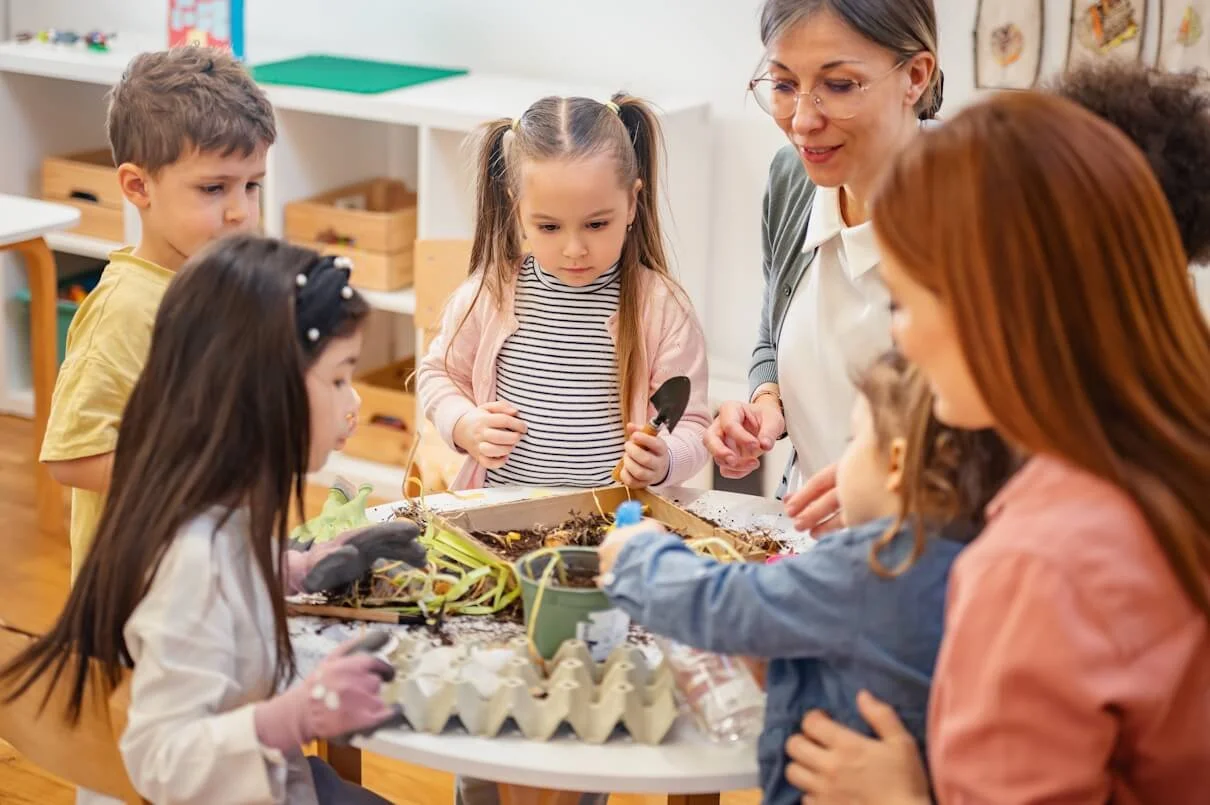
Back-to-school season means new teachers, new routines, and new beginnings — but for young children, it means something even bigger. It means new sensory worlds. Whether your child is starting at a daycare and preschool program in Danbury, or you're just over the line in New Fairfield, their nervous system is doing the same enormous, invisible work this fall. Every classroom has its own blend of sounds, smells, lighting, textures, rhythms, and people. Infants, toddlers, preschoolers, and even kindergarteners absorb all of that with their whole bodies long before they make sense of it with words.
Adults see back-to-school as a shift in schedule. Children experience it as a shift in their entire sensory environment. Their nervous systems work much harder in these first few weeks — taking in unfamiliar voices, navigating new expectations, adjusting to different rhythms, and trying to stay regulated while processing it all. That’s why behavior may spike, naps may shift, emotions may rise, and after-school meltdowns become more common. Nothing is “wrong.” Their bodies are simply working overtime.
Understanding back-to-school as a sensory season helps parents make sense of what’s happening beneath the surface. It also helps us respond with empathy instead of worry, and support instead of frustration. Once we recognize the incredible amount of sensory work children are doing during the transition, everything else begins to fall into place.
The Sensory “Shock” of New Environments
Young children rely heavily on the familiar — familiar routines, familiar voices, familiar lighting, familiar floor textures, familiar smells. When school starts, all of these anchors shift at the same time.
Even confident, outgoing children feel the sensory shock of a new environment. Different lighting alone can impact a child’s mood. HVAC noise, busy hallways, the smell of art supplies or cleaning products, and even the acoustics of a room all affect a little one’s nervous system.
Their brains aren’t misbehaving; they’re adjusting.
Meltdowns Are Not Misbehavior — They’re Sensory Overflow
Meltdowns often get labeled as “dramatic” or “out of proportion,” but they are actually a child’s nervous system asking for help. When the brain is overwhelmed by sensory input — noise, transitions, bright lights, busy rooms, or new expectations — it reaches a point where it simply can’t process anymore.
Sometimes the buildup is invisible. A child may seem perfectly fine all day, only to fall apart when something small goes wrong. This is because young children don’t yet have the verbal or emotional tools to say, “I’m overwhelmed.” Their body does the talking.
For toddlers, sensory overflow might look like crying, throwing things, or refusing to put on shoes. For preschoolers, it might show up as arguing, running away, or shutting down. Kindergarteners may mask all day, then have a massive emotional crash once they’re safe at home.
None of it is misbehavior. It’s communication. And once we understand the sensory root beneath the behavior, we can support the child instead of correcting them.
The After-School Crash: Why Kids Fall Apart at Home
If your child holds themselves together all day but collapses emotionally the moment they see you, you are witnessing restraint collapse — a completely normal, developmentally expected release of pent-up stress.
Children spend the school day listening, waiting, following directions, and navigating higher levels of sensory input than they experience at home. Even pleasant sensory environments still demand energy and attention from young nervous systems.
When your child comes home, their body recognizes, “I’m safe here.” This is when the emotional floodgates open. The crying, whining, crankiness, or full meltdown is not disrespect — it’s relief. You are their soft landing place.
This is why a calming transition ritual — a snack, a quiet cuddle, dim lights, or time with a favorite toy — can make evenings smoother. Their nervous system needs a moment to “come down” before reconnecting socially or diving into the rest of the night.
Infants Feel the Sensory Shift Too
Even babies who cannot walk or talk experience the sensory impact of back-to-school season.
Infants may:
Sleep more
Sleep less
Show increased clinginess
Become overstimulated more easily
Need more breaks, more snuggles, and more predictable routines
A new classroom means new voices, new lighting, new smells, and a whole new rhythm. Babies feel all of that deeply. Their nervous systems are incredibly sensitive, and they depend on adults to help them regulate.
The more predictable their care routines are in these early weeks, the smoother the transition becomes.
Sensory-Seekers vs. Sensory-Avoiders
Every child responds differently to sensory change. Some crave intense sensory input — they jump, climb, crash, run, spin, squeeze themselves into tight spaces, or chew on things. These sensory-seekers are not being wild; they are self-regulating in the only way they know how. Their bodies crave movement or pressure to feel balanced.
Other children are sensory avoiders — they flinch at loud noises, withdraw from crowds, become overwhelmed by fast movement, or melt down when things feel chaotic. They may need more space, soothing environments, softer lighting, or quiet corners to feel comfortable.
Some children switch between seeking and avoiding depending on how full their sensory “cup” is that day. During back-to-school season, both types tend to stand out more:
Seekers become more intense.
Avoiders become more sensitive.
Neither type is “too much.” Both are communicating exactly what their nervous system needs.
The Power of Deep Pressure, Movement, and Calm-Down Rituals
The best way to support a dysregulated sensory system is through calming, grounding input — the kind that tells the nervous system, “You’re safe. Slow down.”
Deep pressure is incredibly effective:
Big, firm hugs
Wrapping in a soft blanket
Pushing a heavy laundry basket
Carrying groceries
Massage or gentle squeezes down the arms
Movement also helps release sensory tension. For toddlers, this might be running in the backyard or jumping on soft cushions. For preschoolers, it may be climbing, swinging, or dancing. For kindergarteners, it might be stretching or simple yoga.
Calm-down rituals anchor the transition between environments. Dimming the lights, playing soft music, offering a snack, snuggling on the couch, or reading a quiet story helps a child’s body integrate the day. These rituals aren’t indulgence — they’re regulation tools.
This is part of why outdoor play matters so much in the first weeks of the school year, and why we build large blocks of outdoor play into every day at Cedar Gables.
Why Routines Regulate the Nervous System
Predictability is one of the strongest sensory stabilizers for young children. When they can anticipate what happens next, their nervous system relaxes.
This is why routines matter so deeply during the back-to-school season. A predictable morning rhythm gives the body confidence. A familiar goodbye ritual comforts the emotional brain. A consistent after-school plan helps a child transition home smoothly.
Children don’t need perfection — but they do need consistency.
Even small anchors, like:
the same morning song
choosing between two breakfasts
a consistent “goodbye phrase”
a daily reconnection moment after school
…give their nervous system something reliable to hold onto.
When Clothing, Backpacks, and New Gear Create Sensory Stress
Parents often overlook the sensory load of new school gear. Backpacks that feel stiff or heavy, shoes that rub, clothing tags that scratch, socks that slip, or jackets with textures that feel “wrong” can make a big difference to a child who is already working hard to process sensory change.
What adults see as minor inconveniences may feel enormous to a heightened sensory system. A scratchy shirt combined with noisy hallways and bright lighting may be the tipping point that triggers a meltdown.
Soft fabrics, tagless shirts, flexible shoes, and lightweight backpacks can turn chaotic mornings into calmer ones. Sometimes the easiest sensory solution is simply making the child comfortable.
The Kindergarten Sensory Avalanche
Kindergarten is the next big step after preschool, and while it's beyond what we offer directly at Cedar Gables, it's often the transition parents ask us about most, so it's worth understanding why it hits so hard.
Kindergarten brings a unique sensory challenge: the shift to full-day structure. Longer school days, more transitions, larger group settings, structured academic blocks, and louder cafeteria environments all tax the nervous system in new ways.
Kindergarteners often appear older because they’re suddenly in a “big kid” world — but their emotional regulation skills are still developing. They may hold it together all day only to crash the moment they get home. Even things like assemblies, special classes (art, music, PE), and cafeteria noise can feel enormous during the first month.
These behaviors aren’t signs they “aren’t ready.” They’re signs they’re adapting. With rest, connection, patience, and gentle routines, they build stamina.
Parents’ Sensory States Influence Their Child’s
Children don’t regulate alone — they co-regulate with us. If a parent is rushed, overstimulated, overwhelmed, or on edge, children pick up on that instantly. They absorb our energy far more than our words.
And it’s important to say: parents experience sensory overload during this season too. Earlier mornings, busier routines, louder households, more decisions, and the emotional load of helping a child transition all add up. When you’re stretched thin, your nervous system signals it — and your child’s nervous system often mirrors it.
Taking even 10 seconds to breathe deeply, soften your shoulders, or slow your pace can change the entire atmosphere of a morning or evening.
A grounded adult becomes a child’s most powerful sensory anchor.
Calm is contagious.
The Takeaway
Back-to-school isn’t just a cognitive adjustment; it’s a sensory one. When we understand what’s happening beneath the surface, our children’s behaviors suddenly make sense. They’re not “dramatic,” “clingy,” or “overly sensitive.” They’re navigating an entirely new sensory landscape with the tools they have.
With patience, predictability, movement, connection, and compassion, parents can help little ones find balance in the swirl of newness. And once their bodies feel safe, their hearts and minds are free to learn, explore, and enjoy the exciting year ahead.
Ready to Help Your Child Thrive?
At Cedar Gables Preschool, we understand that early learning is full-body learning. Since 1972, our two Danbury locations have supported families throughout Danbury and New Fairfield with a daycare and preschool program built around sensory development, emotional regulation, and confidence, through intentional routines, generous outdoor play, and nurturing relationships for infants, toddlers, and preschoolers.
If you're looking for a preschool or daycare in Danbury CT, or you're just over the New Fairfield line, we'd love to show you around. If seeing your child's day, not just hearing about it, would ease that worry, ask us about classroom camera access when you visit.
Click this link to schedule a tour today and see how our Danbury preschool locations help children feel safe, regulated, and ready to explore the world around them.