The Magic of Mud Pies: Why Spring Messes Are Worth It
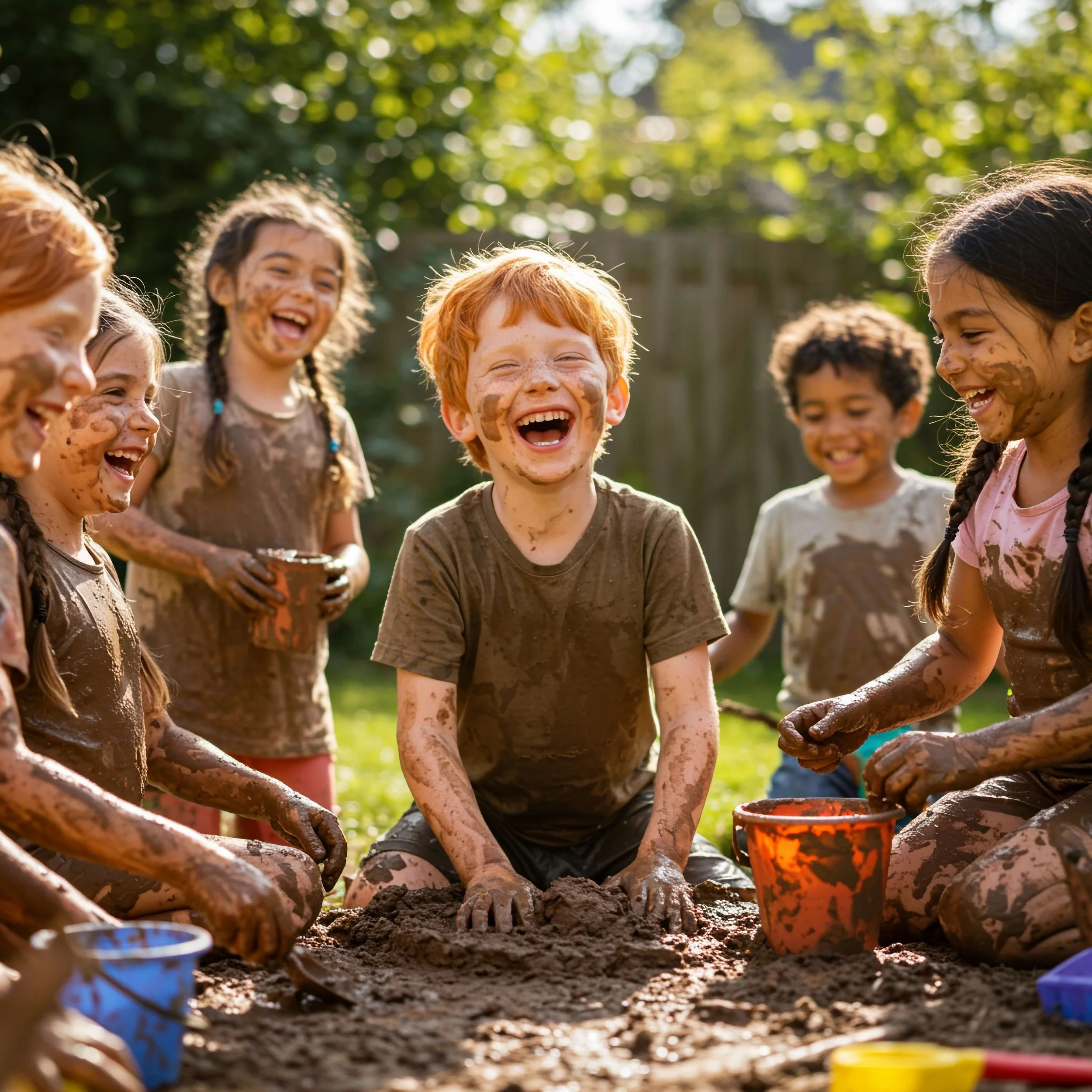
Every spring, as the weather warms and the ground softens, something wonderful happens: children start to dig, splash, and explore with pure joy. And yes — it usually ends with muddy hands, wet socks, and clothes that tell the story of a very good day.
Before you reach for the wipes or rush to hose them down, take a deep breath. That messy play you’re seeing isn’t chaos — it’s learning in motion. Mud pies, puddle jumps, and squishy hands all help children build skills they’ll carry for life — from creativity and coordination to problem-solving and confidence.
Here’s why those muddy moments matter more than you might think — and how you can embrace them at home this spring.
Messy Play Builds the Brain
When children dig, pour, and squish, they’re doing more than just having fun — they’re developing critical brain connections. Hands-on, sensory-rich play activates multiple parts of the brain at once, strengthening pathways that support thinking, memory, and coordination.
As early childhood experts often say, “the hand is the instrument of the mind.” When little ones touch mud, feel textures, and experiment with scooping or stirring, they’re learning about cause and effect, testing ideas, and gaining awareness of how the world works.
Research Insight:
Studies show that sensory play supports everything from fine motor skills to language growth. When children describe what they feel — “cold,” “sticky,” “squishy” — they’re building vocabulary and processing experiences in meaningful ways.
Try This:
Set up a small outdoor play station with dirt, water, and a few old kitchen tools. Let your child mix, pour, and “cook.” It might get messy, but the learning (and laughter) are worth it.
Emotions and Mud Don’t Always Mix — and That’s a Good Thing
Not every child jumps straight into messy play with excitement. Some hesitate to touch the mud or get upset when their hands are dirty — and that’s completely normal. It’s actually an important part of emotional growth.
Messy play gives children a safe way to work through discomfort. By slowly adjusting to new sensations, they’re learning flexibility and resilience — two skills that help them adapt to change in every area of life.
If your child is hesitant, model curiosity. Touch the mud yourself, describe how it feels, and laugh together. When they see you having fun, they’ll often join in at their own pace.
Real-Life Reset:
Start small. Try “dry dirt day” before introducing water. Or offer a small bowl of damp soil with a spoon or paintbrush. Gradual exposure helps children build confidence without pressure.
Gross Motor Skills: Strength in the Squish
Running, jumping, pouring, and digging — these are all part of what early educators call “big body play.” When kids splash through puddles or scoop heavy mud, they’re strengthening muscles in their arms, legs, and core.
These movements support balance, coordination, and endurance — skills that come into play later when they climb playground equipment, pedal a bike, or even sit upright in class.
For infants, sensory experiences like feeling cool mud on their feet or watching water drip through fingers are just as valuable. They help build body awareness and early sensory integration — the foundation for all movement skills.
Try This:
Give your child a small garden shovel and bucket. Encourage digging, filling, and carrying. For toddlers, practice gentle pouring with water and soil. These simple movements quietly build strength and coordination.
Fine Motor Fun: The Art of Mud Pies
When children shape, stir, or pat mud into pies, they’re strengthening fine motor control — the same small-muscle skills used later for writing, buttoning, and self-care tasks.
At our center, we often add natural materials like sticks, pebbles, and leaves to muddy play areas. It sparks imagination and keeps children engaged longer. They start mixing “soups,” making pretend “cakes,” or decorating “mud cupcakes” with flowers and stones.
This kind of play builds creativity while improving hand-eye coordination and focus.
Try This:
Keep a small basket of outdoor “mud tools” — spoons, muffin tins, plastic cups, and sticks. Encourage your child to “bake” or “build” something new each time they play.
Confidence Grows in the Mess
Mud play isn’t just about movement — it’s about confidence. When children get dirty, explore freely, and make discoveries on their own, they feel capable.
They learn that it’s okay to make mistakes, to get messy, and to figure things out independently. That sense of “I did it!” builds genuine pride — not from praise, but from experience.
At Cedar Gables Preschool, we see it every day: a cautious toddler who becomes a curious explorer, or a preschooler who once avoided the sensory bin now diving in with enthusiasm. Growth happens when children are trusted to explore and allowed to get a little dirty.
Real-Life Reset:
If your child resists messy play, give them permission to get dirty. Say something like, “It’s okay if your hands get muddy — that’s how we learn!” Then keep cleanup simple and low-stress.
The Power of Sensory Calm
Believe it or not, playing with mud can actually help children regulate their emotions. For many kids — especially those who experience big feelings — sensory play provides a grounding, calming effect.
The repetitive motions of scooping, pouring, or swirling soothe the brain, helping children focus and unwind. It’s the same reason many adults find gardening or cooking relaxing — sensory input organizes the nervous system.
Research Insight:
Occupational therapists often use sensory play to help children manage anxiety or overstimulation. Texture, temperature, and resistance all provide feedback to the brain that helps reduce stress and improve mood.
Try This:
Encourage your child to dig or pour outdoors after a busy day or before bedtime. You might notice fewer meltdowns and a calmer evening routine afterward.
A Lesson in Care and Responsibility
Messy play also teaches children to care for their environment. When they dig holes, plant seeds, or make “mud soup” for pretend animals, they’re developing empathy and curiosity about nature.
At our center, we talk about how dirt helps things grow and how rain brings life. Connecting these ideas helps children understand that mess is part of nature’s process — and that caring for the earth starts with curiosity.
Try This:
Start a “mini garden” with your child — even one pot of flowers or herbs. Let them dig, water, and check on it daily. It builds responsibility, patience, and pride.
Safety and Clean-Up Made Simple
Of course, messy play still needs a little structure. Always supervise outdoor play and make sure materials are safe and free of chemicals or debris. Choose a spot that’s easy to rinse off afterward, and set clear boundaries like “mud stays outside.”
Keeping a cleanup plan handy — towels by the door, a plastic bin for shoes, and a spare outfit — makes the process quick and stress-free.
Real-Life Reset:
When cleanup is part of the plan, it becomes just another step in the fun instead of a source of frustration. Kids can even help wash toys or rinse their hands, turning cleanup into part of the learning.
No Matter the Weather
No matter the season or where you live, sensory play can take many forms. If it’s too hot, cold, or rainy for mud, try a large indoor bin filled with damp sand, clay, or even homemade dough. The goal isn’t the mess — it’s the experience of touching, exploring, and creating together. Children can build, pour, and pretend anywhere — from the backyard to the kitchen table.
Parent Reflection
Whether it’s your baby’s first squish of mud, your preschooler’s latest backyard masterpiece, or your kindergartener proudly mixing a “mud cake” with friends, these small, messy moments are building big skills. The learning may wash off at bath time — but the benefits stick.
A Season for Exploration
Spring reminds us that learning doesn’t just happen inside the classroom. It happens wherever children are free to explore, imagine, and get a little dirty.
At Cedar Gables Preschool, we know that hands-on experiences are where real growth happens. Our teachers encourage outdoor exploration because we see the results every day: curious, confident, capable children who learn through discovery.
So the next time your child proudly shows you their mud creation, try seeing it through their eyes — not as a mess to clean, but as a moment of discovery.
Ready to see how we turn everyday play into lasting learning? Click here to schedule a tour at Cedar Gables Preschool. Come see how we create safe, engaging spaces where children explore, imagine, and grow through hands-on experiences.